By
Best Ball vs Scramble vs Shamble: What’s the Difference?
Best ball, scramble and shamble all start the same way: everyone on the team tees off. What happens after the drive is the difference, and it changes how long the round takes, how much the weaker players matter, and how competitive it feels. Here’s each one, shot by shot.
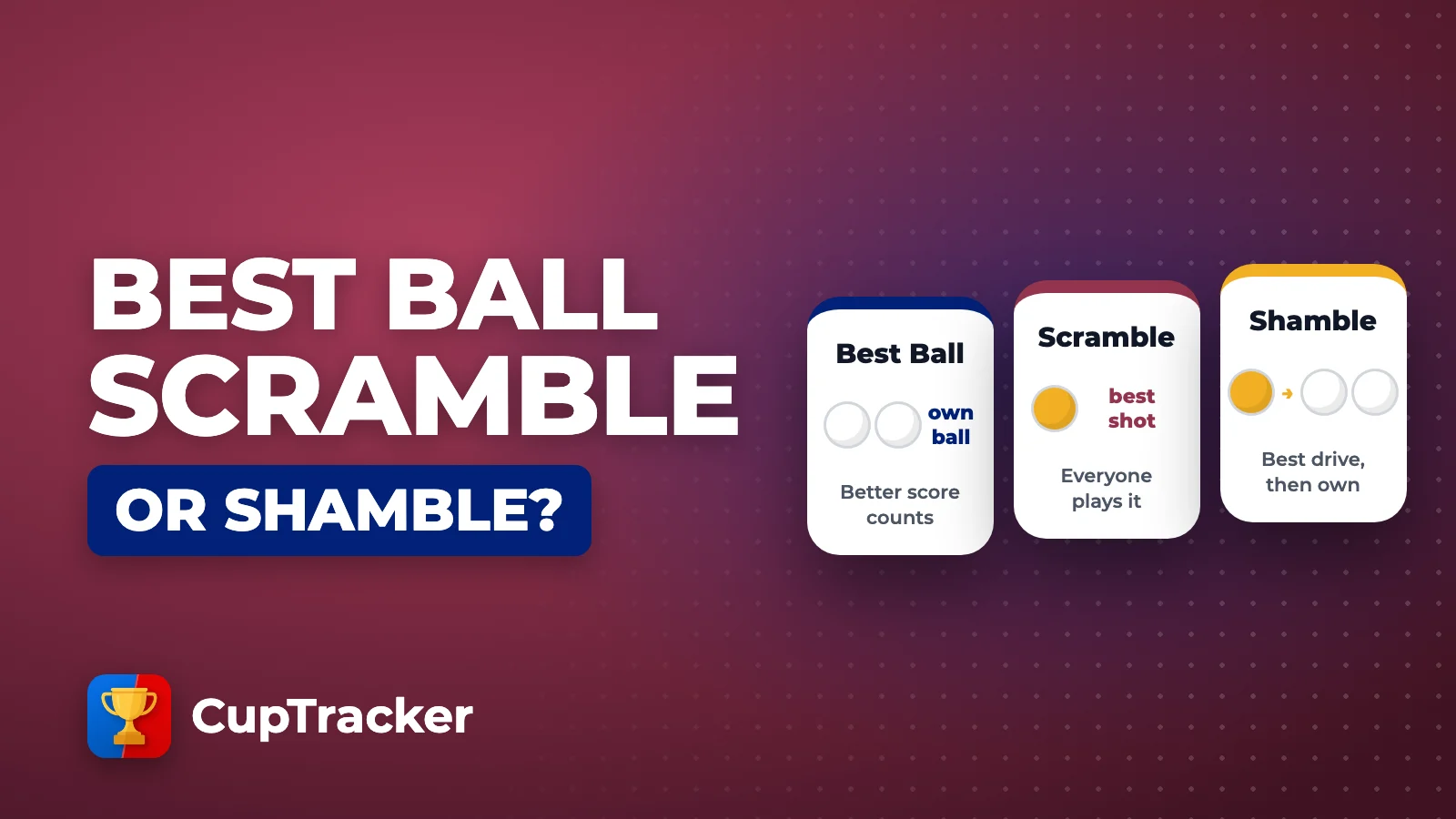
Best ball
Both tee off
Each plays own ball
Both hole out
Lower score counts
Scramble
Pick the best drive
Both hit, pick again
One ball holed
One team score
Shamble
Pick the best drive
Each plays own ball
Both hole out
Lower score counts
| Best ball | Scramble | Shamble | |
|---|---|---|---|
| Pace | Slowest | Fastest | In between |
| Feels like | Real golf, with a partner | Relaxed, team-first | Real golf, easier start |
| USGA allowance | 90% (match play) | 2 players: 35% + 15% | No standard |
| CupTracker default | 90% | 35% low + 15% high | 75% |
Best Ball
Every player plays their own ball from tee to hole, like a normal round. On each hole the team takes the lowest score. In a 2 v 2 match, the pair with the lower best score wins the hole.
On a par 4
Dan makes 5 and Mike makes 4. The team scores 4. Dan’s 5 doesn’t count, but on the next hole his net par might be the one that saves them.
Play it when
Scramble
Everyone tees off, the team picks the best drive, and everyone hits their next shot from that spot. Repeat until the ball is in, putts included. The team has one score per hole.
On a par 4
Mike’s drive finds the fairway, so both play from there. Dan’s approach ends up 10 feet away, so both putt from Dan’s spot. Mike makes it: the team scores 3.
Play it when
Shamble
A shamble is half scramble, half best ball. Everyone tees off and the team picks the best drive. From there, every player plays their own ball into the hole and the lowest score counts.
On a par 4
Both players play from Mike’s drive. Mike makes 5, Dan makes 4. The team scores 4.
Play it when
Which One Should Your Group Play?
Beginners or big handicap gaps
Short on time or playing 36
Competitive, similar handicaps
Own-ball golf, fewer blow-ups
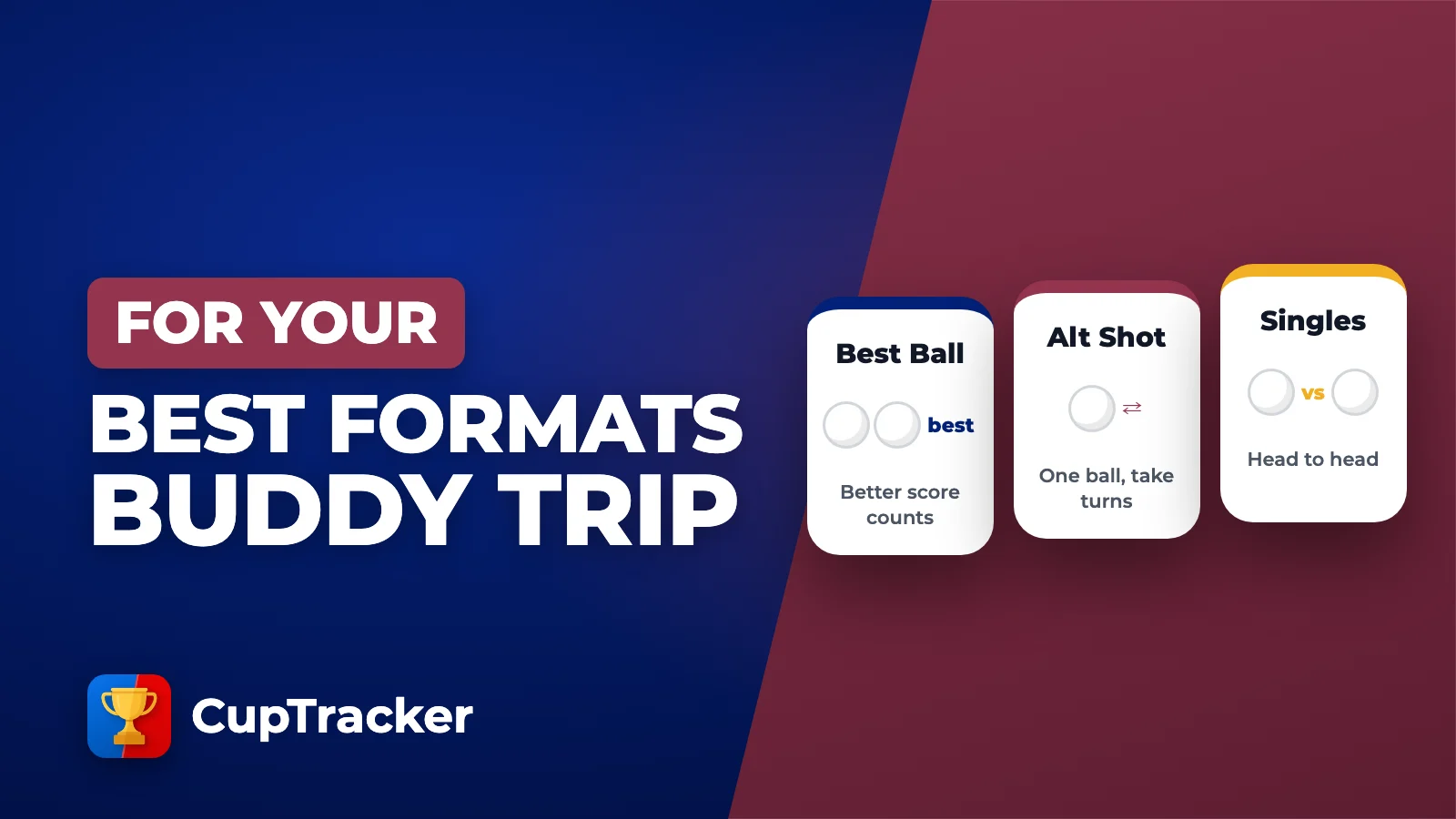
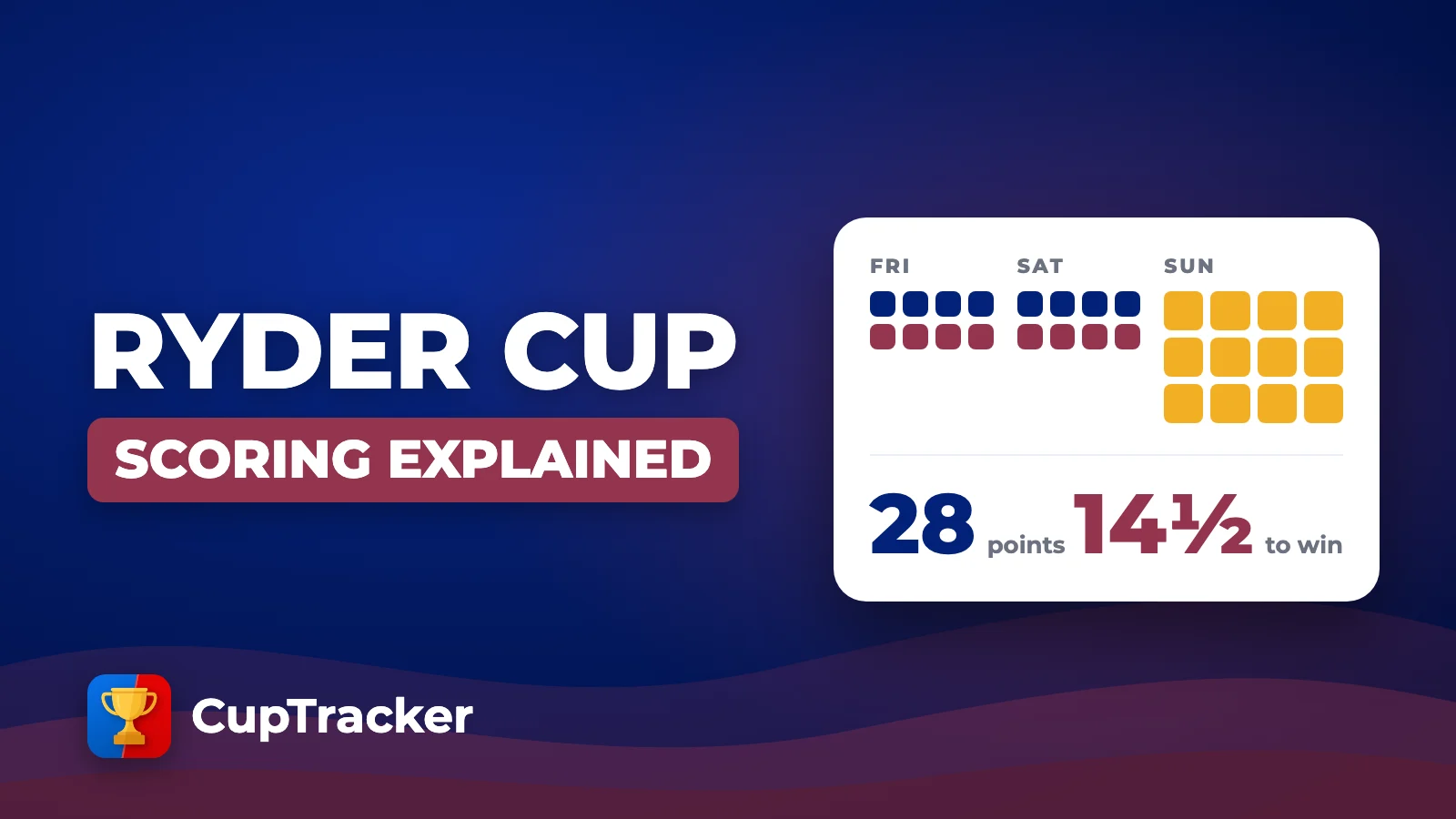
On a multi-day trip, you don’t have to choose just one. A common Ryder Cup-style weekend is a scramble or shamble on day one, best ball or alternate shot on day two, and singles to finish. In CupTracker you can even mix formats in one round, so one group plays best ball while another plays a scramble. More format ideas for a buddy trip.
Watch: Setting Formats in CupTracker
One minute on picking formats for each round, the handicap allowance each one uses, and mixing formats in a single round.
FAQ
What is the difference between a scramble and a shamble?
In both, everyone tees off and the team picks the best drive. In a scramble the team keeps picking the best shot all the way into the hole. In a shamble, everyone plays their own ball from the chosen drive and the best score on the hole counts.
Is best ball the same as four-ball?
Yes. Four-ball is the official name, used in the Ryder Cup. Each player plays their own ball for the whole hole and the better score of the pair counts.
Which golf format is fastest?
A scramble is usually fastest because the team only plays from one spot each shot and weaker players can pick up. A shamble is next. Best ball is slowest because everyone plays the whole hole.
What handicap allowance should I use for each format?
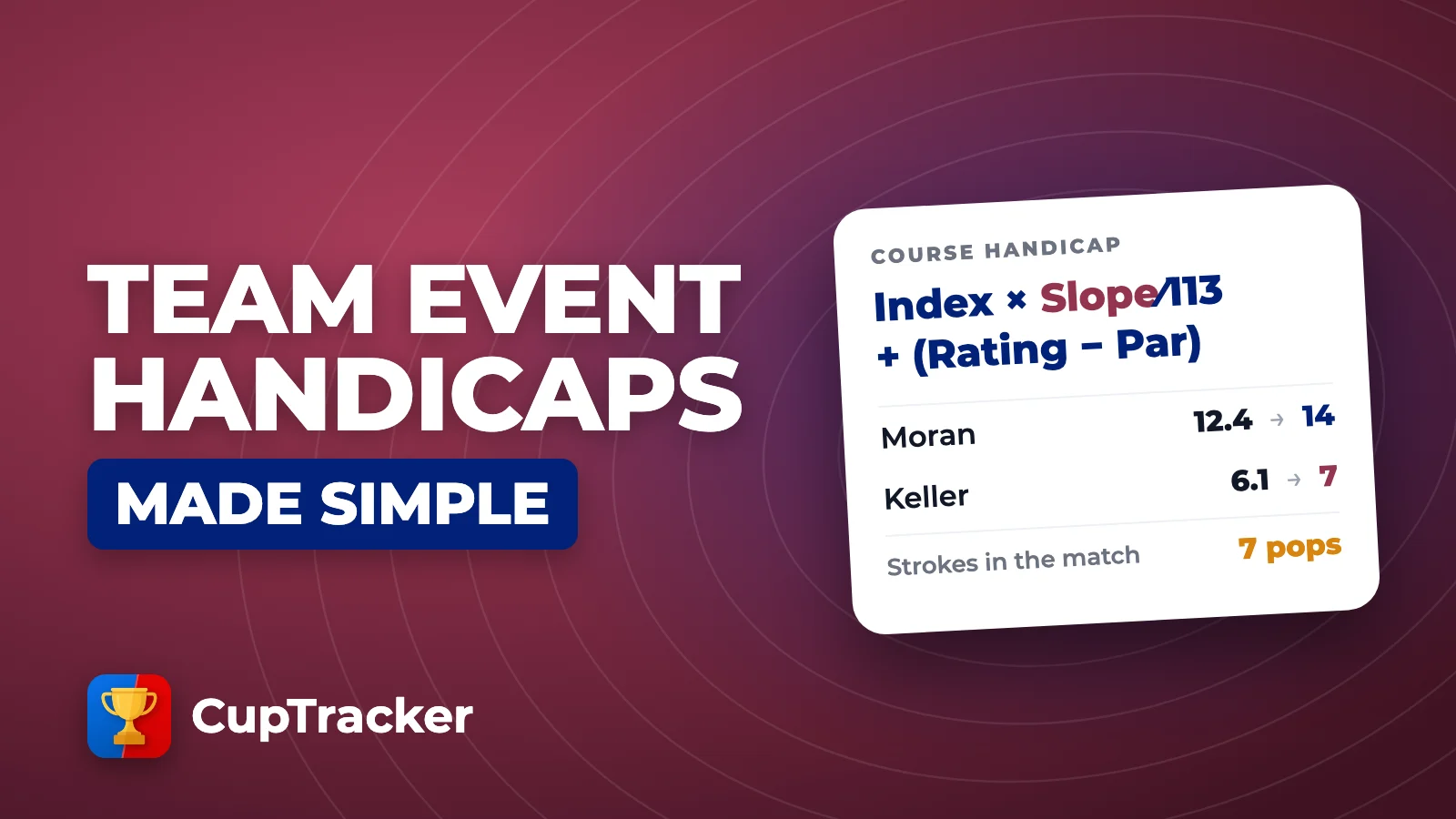
The USGA recommends 90% of course handicap for four-ball match play and 85% for four-ball stroke play. For a 2-player scramble it is 35% of the lower handicap plus 15% of the higher. There is no USGA standard for a shamble; 75–85% is common, and CupTracker defaults to 75%.
Play All Three on One Trip
CupTracker has best ball, scramble, shamble, alternate shot, singles and team total built in, with the handicap allowance for each applied automatically.
Loved by golfers. Read their stories